



The flexibility many workers fought to keep after the pandemic may be quietly working against the newest members of the workforce, the bulk of them Gen Z. As of March 2026, recent college graduates are facing a 5.6% unemployment rate, well above the nation’s overall 4.2% rate, and researchers at the Federal Reserve Bank of New York say remote work is a major reason why.
The contrast is clear when you compare age groups over time. Graduates under 29 saw their unemployment rate move from 3.1% to 3.7% over the nine years measured by the New York Fed, even as workers 29 and older saw a slight improvement, from 1.9% down to 1.8%. The two groups had never drifted this far apart before the pandemic, and researchers now attribute 64% of that drift to remote work.
Many have pointed to generative AI as the reason behind the slump in entry-level hiring. But the timing tells a different story. Researchers say the gap emerged years before generative AI took hold in most workplaces, pointing instead to where young employees are doing their jobs, and how much guidance they’re getting once they’re hired into those roles across the country.
Jobs That Can Be Done From Home Show the Clearest Divide
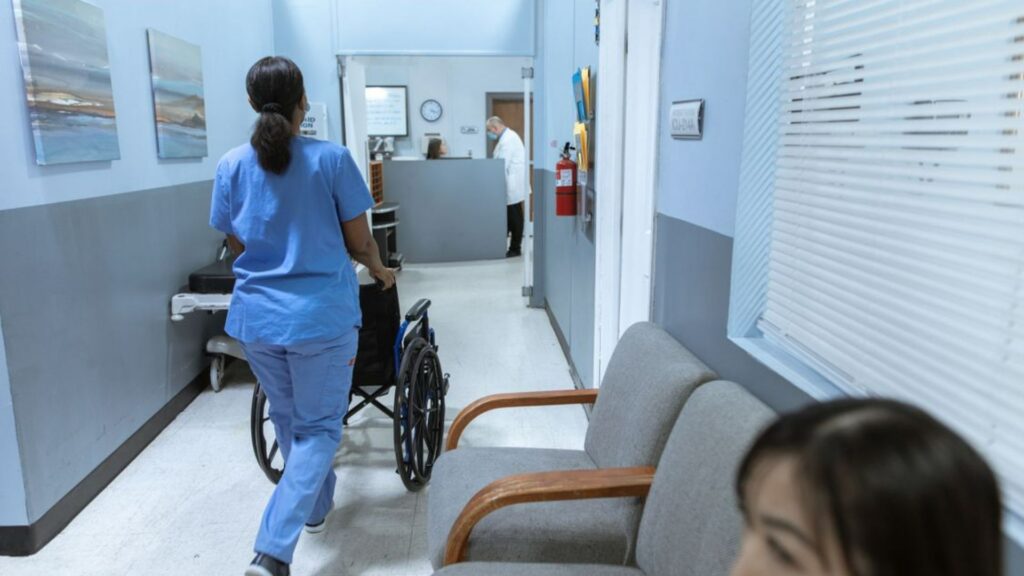
To test their theory, the researchers split jobs into two groups: positions like software engineering and financial analysis that can be done from anywhere, and ones like nursing, funeral home management, and mechanical engineering that require someone to physically show up. In remoteable fields, the unemployment gap between young and experienced workers kept growing. In non-remoteable fields, it spiked briefly in 2020, then returned to normal.
The researchers also studied internal data from an unnamed Fortune 500 company. When its offices shut down during the pandemic, the firm hired fewer inexperienced workers and leaned on more seasoned employees who needed less hand-holding. Once offices reopened, hiring patterns shifted back toward younger workers, with one exception: positions on distributed teams kept favoring experienced hires, even after everyone could return to a desk.
A related study by the same economists, examining software engineers at one large U.S. firm, found that being in the office boosted feedback on coding work by 18.3%, raising the overall quality of what employees produced. Younger engineers benefited the most from that in-person mentorship, and stretches of remote work appeared to leave lasting setbacks on their early development as professionals.
Why Researchers Don’t Think AI Is the Main Driver

Generative AI has absorbed much of the blame for the lack of entry-level jobs, but researchers note the unemployment gap between young and older graduates emerged well before AI tools spread widely through U.S. workplaces. Even when they accounted for how exposed an occupation is to AI, the divide between younger and older workers held steady in both remoteable and non-remotable fields.
That conclusion lines up with a separate working paper out of the London School of Economics and the University of Oxford, as Fortune reported. After combing through hundreds of millions of hiring records and job listings from the U.S., U.K., Canada, and Australia spanning 2017 to 2025, the authors found senior-level hiring rising by 5% to 21%, even as entry-level opportunities dropped by 14% to 29%, depending on the country.
Not every economist agrees on how much remote work is to blame. Nicholas Bloom, a Stanford economics professor who studies remote work, offered a different read when he spoke with CNBC. “I don’t think there is any evidence this is slowing employment,” he said. “Indeed, quite the reverse, as it’s easier for people to work and so labor supply looks to be rising.”
Why These Early-Career Struggles Could Matter for Years to Come

Their tepid response to office life suggests something more nuanced. Gallup data shows only 6% of Gen Z workers prefer to be fully on-site, but a fully remote arrangement isn’t the goal either, since Gen Z also ranks as the generation least drawn to remote-only jobs, largely because of how much they miss face-to-face contact with coworkers. Most, 71%, land somewhere in the middle, favoring a hybrid mix instead.
The stakes go beyond a single rough job search. “The high unemployment rates of young college graduates are particularly concerning because early-career experiences can have lasting consequences,” the New York Fed researchers wrote. Studies have found that people who enter the job market during weak hiring conditions tend to earn less and advance more slowly than peers who started their careers when jobs were easier to find.
Many companies have cited mentorship and training as reasons for return-to-office mandates, and the firm in this study reflects that logic: its stricter in-office policy left it better positioned to keep hiring and training young workers once pandemic restrictions lifted. Whether that pattern holds more broadly as hybrid arrangements remain widespread is still an open question, one that will likely shape job prospects for graduates in the years ahead.
