



Americans clock a lot of hours. WalletHub’s 2026 report put the typical American’s work year at 1,796 hours, which is 179 more than in Japan, 284 more than in the U.K., and 465 more than in Germany. To find out which cities lean into that the hardest, WalletHub scored the 116 largest in the country on 11 metrics, from weekly hours to side jobs. And one city landed in first place.
Cheyenne Works the Longest Weeks

Cheyenne, Wyoming, took the top spot, with employees averaging 40.7 hours a week, the longest in the study. The fifth-highest share of workers there held more than one job, and residents had the third-least leisure time in the nation. Employment rates ranked in the top half of cities, meaning a large share of adults were in the labor force. Cheyenne’s score of 79.39 finished nearly two points ahead of second-place Anchorage.
Anchorage Lands Second With Near-Full Employment

Anchorage had an employment rate above 96 percent, so nearly every working-age resident had a job, and some had more than one. Among workers, 6.4 percent held multiple jobs, which placed the city in the top 25. It sat among the few places where the average workweek went past 40 hours, and residents had the second-lowest amount of daily leisure time of the 116 cities. Anchorage’s overall score was 77.64.
D.C. Workers Leave the Most Vacation Unused
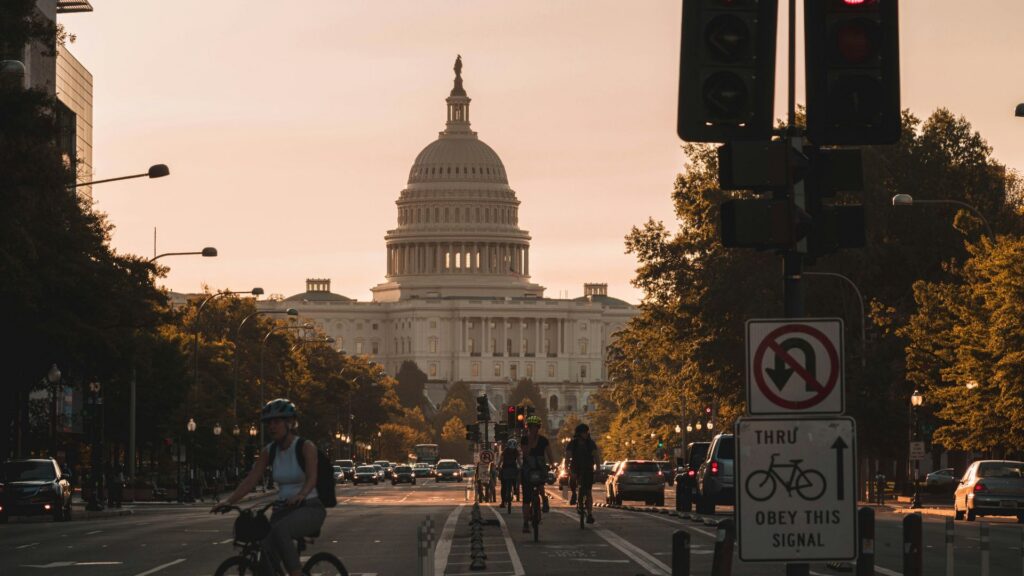
At 64 percent, Washington, D.C., had the highest share of workers leaving vacation time unused. Residents also worked the fourth-most hours per week and spent an average of 30 minutes getting to work. Outside the office, nearly 31 percent of residents belonged to local volunteer groups, and the city had the eighth-lowest rate of disconnected youth, meaning 16- to 24-year-olds who were neither in school nor working.
How WalletHub Scored the Cities
The 11 metrics fell into two groups. Direct work factors covered weekly hours, employment rates, how much vacation went unused, and how many young people were disconnected from school and work. Indirect factors included commuting, multiple jobs, and community involvement, such as volunteering. Each metric was scored on a 100-point scale, with higher numbers meaning more intensive work habits, and WalletHub combined them in a weighted average for each city.
Texas Shows Up Early and Often

Sioux Falls, South Dakota, took fourth, followed by Irving, Texas, Nashville, Tennessee, and Dallas. San Francisco, Denver, and Austin, Texas, rounded out the top 10. Texas had three cities in that group and seven in the top 20, with Fort Worth, Corpus Christi, Arlington, and Plano making the cut. Scores in that stretch were tight, running from 75.70 for Sioux Falls down to 72.74 for Austin.
Austin Tops One List and Sits 97th on the Other

Austin ranked first on direct work factors, yet 97th on indirect ones, which cover commuting, multiple jobs, and community involvement. Irving was third and 72nd, and Dallas was fifth and 64th. The gap showed up across the whole top 10, where every city ranked better on direct factors than on indirect ones, with Washington, D.C., closest at sixth and seventh. Austin’s lopsided split still earned 10th place overall.
Baltimore Led the Indirect Rankings but Landed 39th

The reverse also showed up in the rankings. Baltimore ranked first on indirect work factors, covering commutes, side jobs, and volunteering, but 75th on direct ones, which left it 39th overall. Milwaukee was second on indirect and 101st on direct, finishing 83rd. Portland, Oregon, was fourth on indirect and 80th on direct, landing 57th overall. Boston, third on indirect, and Seattle, sixth, placed 29th and 32nd overall.
Burlington Finished Last, With Detroit Next

At the other end, Burlington, Vermont, ranked 116th with a score of 31.72, less than half of Cheyenne’s 79.39. Burlington finished last on direct factors and 105th on indirect ones. Detroit was 115th, and Buffalo, New York, Newark, New Jersey, and Toledo, Ohio, filled out the rest of the bottom five. Each city was measured strictly within its municipal boundaries, leaving out surrounding metro areas.
Work Hard Without Overworking

Depending on the city, between 40 percent and 64 percent of Americans left at least some of their allotted vacation time unused, WalletHub analyst Chip Lupo noted. Long hours, minimal time off, and side jobs all lead to higher productivity, Lupo said, but they can also have negative effects on people’s physical and mental health. His takeaway was that people should find a way to “work hard without overworking.
